Search This Blog

Sunday, December 28, 2014

"Let It Go"

I don't know if you've gotten to see Frozen yet, but I thought it was a fantastic movie! The soundtrack was super catchy and well-written, the characters developed nicely, and I thought the message of family love was great!

If you've seen the movie, you may have fallen in love with the song "Let It Go" as much as I have. This anthem of self-discovery and self-awareness is awesome! Apparently, lots of other people think so too, since there are a ton of covers of it out there. I've posted a few of the coolest ones I've seen below. Listen to how they're all different people's interpretations of the same songs, and how different people's voices make it sound, well, different!

DRUM Card Opportunity: Email me your answer to the following prompt, using complete sentences and proper spelling/grammar. Which version of this song is your favorite, and why? 

The original (sung by Idina Menzel, actress, starred in Wicked in its original Broadway run, the movie Rent, and more)

The Demi Lovato version (as sung during the credits)

This is a bit of a parody by Christina Bianco of other singers' voices, including Idina Menzel, Demi Lovato, Britney Spears, Alanis Morissette, Celine Dion, Kristin Chenoweth, Adele, Julie Andrews, Barbara Streisand, Christina Aguilera, Kelly Clarkson, and Liza Minnelli. Listen to how Bianco alters her tone quality to make her voice sound like an exaggeration of the other singers.

This one is really sweet! It features Alex Boye and a children's choir in an "Africanized tribal cover."

This is a cover by thrash metal singer Caleb Hyles.

This one is a medley (combination of songs) of songs from Frozen sung (and acted out...haha!) by Pentatonix. Make sure you watch all the way to the end for outtakes!

The Piano Guys also did a cover of it, combined with Antonio Vivaldi's "Winter."

Sometimes traffic reporters (like Bob Herzog) like to spice things up a bit and sing their winter driving tips... Here's a funny video of him singing "Just Don't Go" - some good advice for when the roads are really nasty!

I don't know if you've ever used Google Translate before, but it's not always 100% reliable... For example, if you translate something from English to another language, then translate what it gives you back into English, it won't always show you what you started with (and is often hilariously off). Case in point - see how it totally changes the meaning of lots of the song!

Can we just talk about how adorable these kiddos are??

Jimmy Fallon is the new host of The Tonight Show, and he often has musical guests sing their songs with him and The Roots using classroom instruments. It's really neat to see, and it's great that he supports music!

Brian Hull did an impersonation video using Disney characters. I'm pretty sure most of them will be familiar to you. He does characters from Pirates of the Caribbean (Captain Barbosa and Jack Sparrow), The Lion King (Scar, Pumbaa, and Timon), Monsters Inc. (Roz and Mike Wazowski), Beauty and the Beast (Lumiere and Cogsworth), The Little Mermaid (Sebastian and Scuttle), Up (Dug and Alpha), The Jungle Book (Kaa), The Princess and the Frog (Ray), Winnie the Pooh (Winnie the Pooh and Tigger), and other Disney characters (Pete, Mickey Mouse, Minnie Mouse, and Goofy). Just like Christina Bianco does in her video, he changes the timbre (pronounced "TAM-ber" - it's the tone color and aspects of sound that are different between voices and instruments, so you can hear the difference between a flute and a trumpet or between two of your friends talking) to achieve these impersonations (which are hilarious!). Enjoy!

Holiday Fun

Christmas may be over, but if you're still in the mood for holiday music, this is the place to be! In the last couple weeks before the holiday musical, if students had extra time in class after practicing their songs for that, they'd get to choose from a variety of short reward videos. Lots of students really gravitated towards Pentatonix, Piano Guys, and A Claymation Christmas Celebration (yes, the one from the '80s!). Here are some of their favorites...

From A Claymation Christmas Celebration


"12 Days of Christmas" (I told the students this was more like Christmas carols in a blender, plus some Toto)


From Pentatonix

"Dance of the Sugarplum Fairy" (from The Nutcracker)


And finally, a karaoke track...

Thursday, November 6, 2014

If it's hammered, plucked, or bowed, then it is a string, you know!

And finally...the string family.
Piano
The piano's strings are hammered, which is how the sound is created.

This is a recording of him doing it in 1929, and the recording is set to pictures of him. The Philadelphia Orchestra, conducted by Leopold Stokowski (1882-1977), a famous conductor.


Harpsichord
Remember, the harpsichord's strings are actually plucked!
This is a video of a trio made up of a violin, a cello, and a harpsichord. See if you can pick out the different instruments' sounds.
Guitar

Bass Guitar (Electric Bass)


Conductors

What do conductors do, anyway? Do they just stand at the podium and keep a beat?

Nope!

Conductors use their faces, hands, and body language to convey (show):
  • Tempo (speed)
  • Dynamics (volume)
  • Time signature (is the piece in 4/4? 3/4? 6/8? etc)
  • Mood (is it a bouncy, happy piece, or a slow, mournful (sad) piece?)
  • Articulation (is it a light staccato or more of a weighted staccato?)
  • Cues (do different instruments play at different times? is there a soloist?)
The conductor also has to study the score (all of the musicians' parts on the same page, usually many, many pages long - for example, the link on the word "score" is for the band version of "Strange Humors" by John Mackey - it's 24 pages long, and it has 36 people's parts on it!) very closely and know what each musician is doing at all points in the piece of music. It's hard to make eye contact if you're staring at the music the whole time, so conductors can express the qualities listed above the best when they have the score memorized.

The video below is an interview with Marin Alsop, Music Director of the Baltimore Symphony. 
(If you'd like, start at 2:00 to skip the not-as-relevant-to-what-we're-learning stuff.) 
(This is the video we watched in class where Katie Couric, the newscaster, tried to conduct an ensemble.)

This video is a CBS This Morning segment featuring Wynton Marsalis (famous jazz and classical trumpet player) explaining the similarities between quarterbacks and orchestra conductors. In it, he interviews New England Patriots quarterback Tom Brady and New York Philharmonic conductor Alan Gilbert. Football players/fans and sports fans, I think you'll appreciate this one!

The last video shows a lot of Gustavo Dudamel's conducting from the orchestra's perspective. He says that the conductor's instrument is not just the baton - it is the whole body. (He definitely embodies that statement!) The orchestra is playing Danzon No. 2 by Arturo Marquez. The camera angles are great - you can see a lot of the instruments we've talked about! (Sorry, no saxophone or euphonium, though.)

Happy birthday, John Philip Sousa!

Today, we celebrate the 160th anniversary of John Philip Sousa's birth!

A picture of John Philip Sousa from this Chicago Tribune article (which contains more biographical information)
John Philip Sousa was a very famous American composer who is known as the March King since he wrote so many marches. One of his marches, "Stars and Stripes Forever," was voted by the United States Congress to be the official national march of the United States of America! He also led his own band, and he conducted about 14,000 (yes, that's 14 thousand) concerts throughout his life!

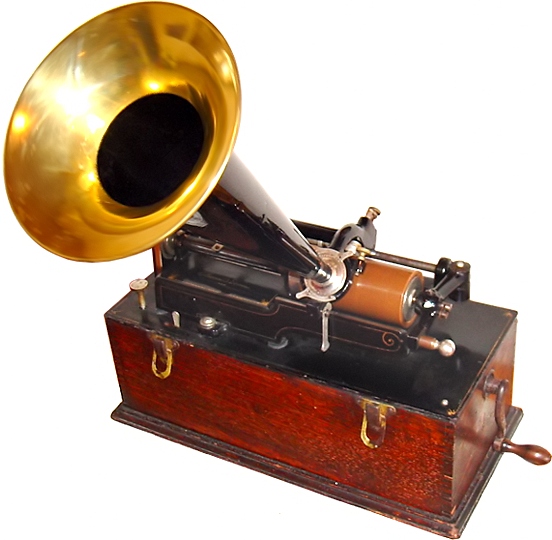
His father played trombone in the United States Marine Band, so Sousa was surrounded by music as a child. He began learning several different instruments at a young age. When he was 13, he tried running away to join a circus band. After that, his dad signed him up as a band helper for the U.S. Marine Band. He stayed with the Marine Band until he was 20, then came back at the age of 25 to conduct The President's Own (the premier military band in the country, as well as the oldest continually active professional musical organization in America since they began in 1798). Throughout his 12 years with The President's Own, Sousa continued to compose, took the group on a couple tours, and recorded with the group. Phonographs were a relatively new invention, and Colombia Phonograph Company wanted to record a military band and sell the recordings. Between 1890 and 1897, The President's Own recorded more than 400 pieces of music.

Phonograph from 1899

In 1892, Sousa resigned and started his own band. They toured the world from 1900 to 1910. After World War I (1914-1918), the Sousa Band continued touring and championing the right of music education for all children (PBS). Sousa wasn't only a skilled musician, though - he kept busy in other ways as well. In addition to the 136 marches and 10 operas that he composed, he also wrote 3 novels and an autobiography.

For more information about John Philip Sousa, check out PBS's page on him. You can also check out this public radio article (with audio interview with the director of the New Sousa Band).

In the meantime, I'll leave you with this video of The President's Own performing "Stars and Stripes Forever."


DRUM CARD OPPORTUNITY: Using your own words, email me the most interesting thing you learned from this blog post or the links within it. (Don't just copy and paste.)

Happy birthday, Adolphe Sax!

Today, we celebrate the 200th anniversary of Adolphe Sax's birth!

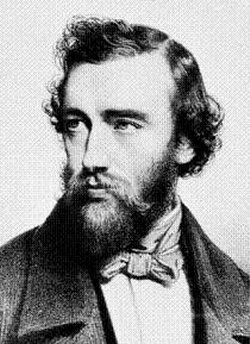
Adolphe Sax, picture from http://www.famousbelgians.net/sax.htm (which has more biographical information)
Adolphe Sax was the inventor of the saxophone. He was born in Belgium on November 6, 1814. His father was an instrument maker, so Adolphe grew up helping his dad. Adolphe helped make improvements to the bass clarinet before inventing his own family of instruments called the saxhorns (pictured below - spoiler alert: they don't look anything like saxophones). After that, he invented the saxophone.
The saxhorn family. There's a band in Michigan (that a few of my friends have played in) that dresses up in old-time clothes and plays saxhorns. http://www.dodworth.org
If you would like to listen to examples of different saxhorns and saxophones, click on this link to listen to a short NPR interview about Adolphe Sax's birthday!

DRUM CARD OPPORTUNITY: Using your own words, email me the most interesting thing you learned from this blog post or the links within it. (Don't just copy and paste.)

Monday, October 20, 2014

B-b-b-buzz your lips - b-b-brass instruments!

Up next: The brass family!

Trumpet (link to the University of Minnesota Marching Band's 2013 homecoming show with a big trumpet feature on the first piece of music that they play, "Scream Machine")
Maynard Ferguson and his band performing "Birdland" (Can you pick out the other instrument sounds in the video as well?)

Horn
Dale Clevenger (who retired as the principal hornist of the Chicago Symphony Orchestra in 2013) performing Mozart's 2nd horn concerto (the solo starts about 50 seconds in)

Mellophone
This is the marching band version of the horn (kind of like the sousaphone is the marching band version of a tuba). Listen for it in the following Drum Corps International clip of the Bluecoats performing their 2011 show, "Brave New World." The mellos are the instruments with the melody, and they're in the front of the group doing all sorts of leg choreography. (See if you can find the contras too - that's the other marching version of a tuba, up on your shoulder!)

Trombone
Listen for the piccolo solo that I played for you in class...on trombone!


Euphonium
Adam Frey plays the song "Nessun Dorma" from Puccini's opera Turandot - this was originally a vocal solo, but it sounds beautiful on the euphonium too!
Tuba
This is Carol Jantsch from the Philadelphia Orchestra playing "Flight of the Bumblebee" with some middle school/high school students.
Sousaphone

Tuesday, October 7, 2014

If it's made of wood or it used to be, then it's in the woodwind family!

The 4th and 5th graders continue their instrumental studies with the woodwind family!

Flute (classical link, contemporary (modern-time) link, beatboxing flute)
Piccolo (video of Ms. Galligan performing "Scars and Scrapes Forever," a parody of "Stars and Stripes Forever")

Clarinet
Percy Grainger's "Molly on the Shore," for clarinet choir
Can you find some of the low clarinets?

Saxophone
"Strange Humors" by John Mackey, for saxophone quartet (soprano sax, alto sax, tenor sax, and bari sax) and djembe (hand drum)
Listen to the baritone sax solo at the beginning of this fun jazz chart!

Oboe (link to DSO Kids page on the oboe)
English Horn (link to the DSO Kids page on the English Horn)

Bassoon (link to DSO Kids page on bassoon)
The Breaking Winds bassoon quartet (they met at Eastman School of Music) playing a Lady Gaga medley

Contrabassoon (link to DSO Kids page on contrabassoon)

Sunday, October 5, 2014

Music Notes: End of September 2014

Hillcrest ElementaryMusic Notes

End of September 2014
  
Hello, everyone!

My name is Ms. Corinne Galligan, and I’m the new music teacher at Hillcrest. I invite you to check out our music classroom blog at:


So far this year, we've played name games, learned music room rule songs, had a birthday learning celebration of “The Star-Spangled Banner,” and reviewed different music concepts. If you haven’t been serenaded with any of the rules songs (or the original tunes they were taken from), ask your child(ren) about the music rules! You can find more about the rules on the music blog.

“The Star-Spangled Banner” celebrated its 200th birthday on September 14, so we celebrated by learning the history behind it (grades 3-5), reviewing the official etiquette during its performance (K-5), and practicing that etiquette while singing the song (K-5). You can learn more about what we learned in class by checking out the music blog.
Students also learned about ways to earn DRUM (Demonstrating Respect and Understanding in Music) cards for individual recognition of above-and-beyond behaviors. When students earn three DRUM cards, they may redeem them for a reward (like eating lunch with me or sitting in my chair during one class). Students can choose to earn DRUM cards by being leaders within the music classroom, answering questions very well, posing thought-provoking questions, completing DRUM card opportunities posted on the music blog (and sent to their school email addresses), or attending/performing in music performances of any kind outside of the school day. If you’re interested in attending performances, here are a couple of (free! optional!) upcoming ones in the community:

                   Wednesday, October 22      7 pm               Pulaski Area Community Band Concert
                                                                                                PHS Ripley PAC

                   Saturday, November 1         7 pm               Red Raider Showcase Concert
                                                                                                PHS Ripley PAC

If they are able to attend a performance, in order for me to verify their attendance, I ask that children bring in a program with their name on it and tell me (or write on the program) something about it: something new they learned, their favorite part of it, etc.

If you have any questions or concerns, please contact me. I look forward to meeting you throughout the school year!


Ms. Corinne Galligan
(920) 822-0433
cmgalligan@pulaskischools.org
musicathillcrest.blogspot.com 

Saturday, October 4, 2014

Hit, rub, scrape, or shake - that's what makes percussion great!

The 4th and 5th graders started their unit on instrument families with the percussion family!

Snare Drum (link to video below)

Bass Drum (link to Dallas Symphony Orchestra (DSO) Kids page on the bass drum, including a sound clip of it)

Marching Percussion (including snare drum, bass drum, and tenor drums; link to video below - the Bluecoats drumline warming up for a competition in 2014)

Timpani (link to video below)

Xylophone (link to DSO Kids page on the xylophone, including three sound clips of it)

Marimba (link to video below; everything is bigger than the xylophone - the bars, the resonators (tubes underneath the bars that amplify the sound), the range, and the sound, which has longer resonance than the xylophone - a way to remember this difference is "massive marimba")

Also, check out this video of Pulaski High School student Destin Wernicke performing his composition for marimba, "Going Home." (If you search his name on YouTube, you can also find videos of him performing on drumset, piano, and more.)

Vibraphone (link to world-famous jazz vibraphonist Joe Locke's video page of his website. We watched the beginning of "Summertime" in class.)

Glockenspiel (aka orchestra bells or bells) (link to DSO Kids page on the glockenspiel, including three sound clips of it)

Chimes (aka tubular bells) (link to video below)

Piano
The piano is often considered a percussion instrument because its sound is produced by a hammer striking a string when the corresponding key is pressed (link to animated video below).


Want to see other ways the piano can be used as a percussion instrument? This video by the Piano Guys is really neat! (Actually, all their videos are neat - check them out on YouTube!)

Crash Cymbals (watch the video for timpani near the top of this post, and pay attention to the crash cymbals. Remember the purposes for holding the cymbals so high - the sound waves can carry over the orchestra instead of getting blocked/absorbed by the orchestra, and humans are visual creatures, so it's easier to pick out the sound when you can see the instrument creating the sound.)

Tambourine (link to video below)

Sleigh Bells (link to video below)

Remember, the second technique he shows in the video is the preferred technique.

Maracas (link to video below)

Triangle (link to DSO Kids page on the triangle)

Cowbell (link to video below)

Guiro (link to video below)

Drum Set (link to video below)

Congas (link to video below)

Bongos (link to video below)