This is a recording of him doing it in 1929, and the recording is set to pictures of him. The Philadelphia Orchestra, conducted by Leopold Stokowski (1882-1977), a famous conductor.
What do conductors do, anyway? Do they just stand at the podium and keep a beat?
Nope!
Conductors use their faces, hands, and body language to convey (show):
Tempo (speed)
Dynamics (volume)
Time signature (is the piece in 4/4? 3/4? 6/8? etc)
Mood (is it a bouncy, happy piece, or a slow, mournful (sad) piece?)
Articulation (is it a light staccato or more of a weighted staccato?)
Cues (do different instruments play at different times? is there a soloist?)
The conductor also has to study the score (all of the musicians' parts on the same page, usually many, many pages long - for example, the link on the word "score" is for the band version of "Strange Humors" by John Mackey - it's 24 pages long, and it has 36 people's parts on it!) very closely and know what each musician is doing at all points in the piece of music. It's hard to make eye contact if you're staring at the music the whole time, so conductors can express the qualities listed above the best when they have the score memorized.
The video below is an interview with Marin Alsop, Music Director of the Baltimore Symphony.
(If you'd like, start at 2:00 to skip the not-as-relevant-to-what-we're-learning stuff.)
(This is the video we watched in class where Katie Couric, the newscaster, tried to conduct an ensemble.)
This video is a CBS This Morning segment featuring Wynton Marsalis (famous jazz and classical trumpet player) explaining the similarities between quarterbacks and orchestra conductors. In it, he interviews New England Patriots quarterback Tom Brady and New York Philharmonic conductor Alan Gilbert. Football players/fans and sports fans, I think you'll appreciate this one!
The last video shows a lot of Gustavo Dudamel's conducting from the orchestra's perspective. He says that the conductor's instrument is not just the baton - it is the whole body. (He definitely embodies that statement!) The orchestra is playing Danzon No. 2 by Arturo Marquez. The camera angles are great - you can see a lot of the instruments we've talked about! (Sorry, no saxophone or euphonium, though.)
John Philip Sousa was a very famous American composer who is known as the March King since he wrote so many marches. One of his marches, "Stars and Stripes Forever," was voted by the United States Congress to be the official national march of the United States of America! He also led his own band, and he conducted about 14,000 (yes, that's 14 thousand) concerts throughout his life!
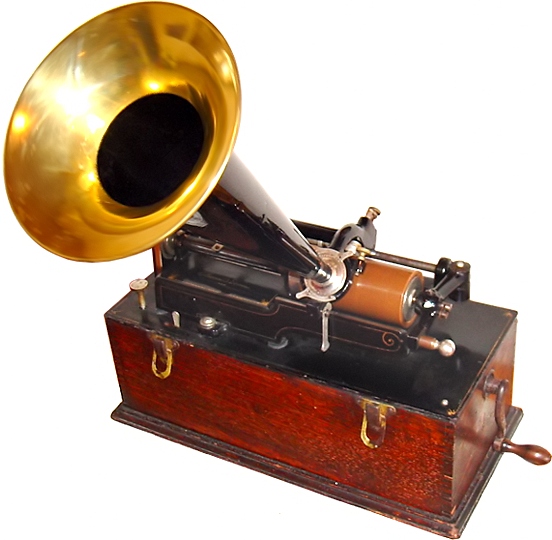
His father played trombone in the United States Marine Band, so Sousa was surrounded by music as a child. He began learning several different instruments at a young age. When he was 13, he tried running away to join a circus band. After that, his dad signed him up as a band helper for the U.S. Marine Band. He stayed with the Marine Band until he was 20, then came back at the age of 25 to conduct The President's Own (the premier military band in the country, as well as the oldest continually active professional musical organization in America since they began in 1798). Throughout his 12 years with The President's Own, Sousa continued to compose, took the group on a couple tours, and recorded with the group. Phonographs were a relatively new invention, and Colombia Phonograph Company wanted to record a military band and sell the recordings. Between 1890 and 1897, The President's Own recorded more than 400 pieces of music.
In 1892, Sousa resigned and started his own band. They toured the world from 1900 to 1910. After World War I (1914-1918), the Sousa Band continued touring and championing the right of music education for all children (PBS). Sousa wasn't only a skilled musician, though - he kept busy in other ways as well. In addition to the 136 marches and 10 operas that he composed, he also wrote 3 novels and an autobiography.
For more information about John Philip Sousa, check out PBS's page on him. You can also check out this public radio article (with audio interview with the director of the New Sousa Band).
In the meantime, I'll leave you with this video of The President's Own performing "Stars and Stripes Forever."
DRUM CARD OPPORTUNITY: Using your own words, email me the most interesting thing you learned from this blog post or the links within it. (Don't just copy and paste.)
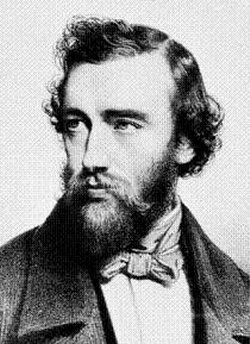
Adolphe Sax was the inventor of the saxophone. He was born in Belgium on November 6, 1814. His father was an instrument maker, so Adolphe grew up helping his dad. Adolphe helped make improvements to the bass clarinet before inventing his own family of instruments called the saxhorns (pictured below - spoiler alert: they don't look anything like saxophones). After that, he invented the saxophone.
The saxhorn family. There's a band in Michigan (that a few of my friends have played in) that dresses up in old-time clothes and plays saxhorns. http://www.dodworth.org
If you would like to listen to examples of different saxhorns and saxophones, click on this link to listen to a short NPR interview about Adolphe Sax's birthday!
DRUM CARD OPPORTUNITY: Using your own words, email me the most interesting thing you learned from this blog post or the links within it. (Don't just copy and paste.)